The Researcher: Sara Santa-Aguilar

I have a degree in Literature (Cum laude, Faculty of Arts and Humanities and Meritorious Monograph Award, 2013), Philosophy (Cum laude, Faculty of Social Sciences, 2013) a Master’s degree in Literature (Cum laude, Arts and Humanities, 2014) from the University of the Andes (Colombia) and a Ph.D. in Arts and Humanities (Sobresaliente cum laude with International Mention, 2019) from the University of Navarra. I have devoted myself to the study of the poetry inserted in Cervantes’ complete prose. My monograph El Aleph de los poetas: la poesía inserta en la narrativa de Cervantes won the VI Premio de Investigación Cervantista José María Casasayas and was published by the University of Alcalá de Henares (2021).
In 2022 I was granted a Marie Skłodowska Curie Individual Fellowship within the Horizon Europe calls of the European Commission to develop my project “Violence and Happy Endings in the Spanish Golden Age Narrative”. In 2023 I was granted funding from the University of Milan for my project “La violenza di genere nella letterattura ispanica attraverso i secoli” PSR-LINEA4-2022. In 2025, I received a PNRR MSCA Young Researchers grant, funded by the Italian Ministry of Universities and the European Union, for my NONARCADICS project, which explores non-physical violence in the Arcadia. The following year, I received funding from the University of Milan for my project, “Nuclei diegetici e incrocio di generi letterari tra l’Italia e la Spagna della prima modernità” (PSR-LINEA-4-2025).
I am a member of the advisory board of the journal Hipogrifo, and I have served as a reviewer for prestigious journals such as La Perinola, Anuario Calderoniano, Metal Music Studies, Calíope, and the Centro de Estudios Linguísticos y Literarios of El Colegio de México. I have taught Spanish Literature at the Universidad de los Andes (Colombia), the Universidad de La Rioja (Spain), the University of Münster (Germany) and the University of Milan (Italy). In 2025, I was elected to the Executive Council of the Cervantes Society of America.
Research supervisor
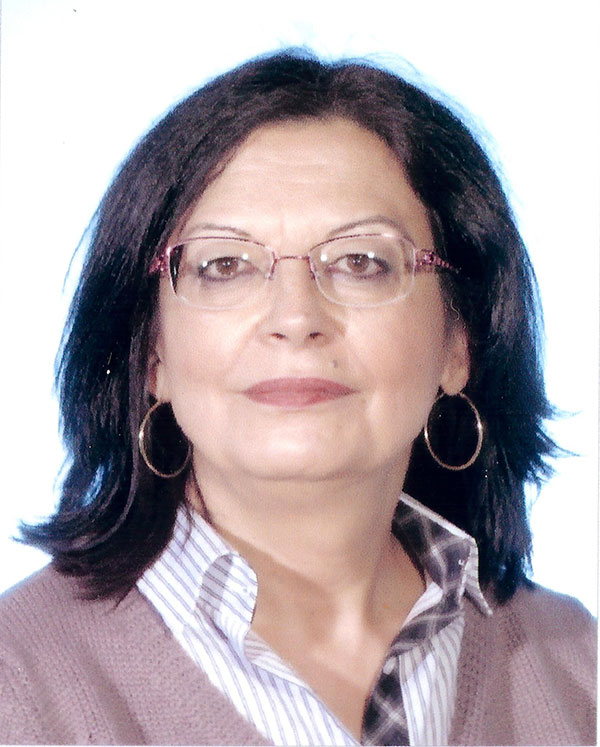
Maria Rosso is full professor of Spanish Literature at the University of Milan. Her research activity, which covers a wide chronological range, focuses on philological aspects of texts and intertextual and intercultural relations. In her studies on 16th- and 17th-century fiction (novellas, tales, and Aesopic fables), she has focused on the analysis of the influence of the Decameron and Sansovino’s sillogi in post-Tridentine Spain. In relation to the publishing market of the time, she analyzed the reception of Italian works in various authors, from Antonio de Torquemada and Timoneda to Lope de Vega, Cervantes, Matías de los Reyes, Mey, Zayas and Arguijo. She edited the annotated critical editions of I poeti del Ventisette (Venice, Marsilio, 2008), Sebastián Mey’s Fabulario (Naples, Liguori, 2015) and Jacinto Abad de Ayala’s Novela del más desdichado amante (Madrid, SIAL, 2021). After the first critical edition of the works of Garcilaso de la Vega (Madrid, Real Academia Española, 1990), she published that of the major poems (Madrid, Clásicos Hispánicos, 2017). In the field of philological studies of the Golden Ages, she has devoted herself to the analysis of manuscript Cancioneros from the sixteenth and seventeenth centuries, with a particular interest in the transmission of Góngora’s works. She has also analyzed the evolution of poetic canons in the 18th, 19th and 20th centuries, with studies on Jovellanos, Meléndez Valdés, Rosalía de Castro and the Poetas del vintisiete; and the theory of the short story, applied particularly to Leopoldo Alas “Clarín,” on which she has published a monograph and several articles. She is currently working on the literary treatment of violence, especially gender violence, from a diachronic perspective. Her interest in Cervantes’ work and the literature of the Golden Ages remains central.
Building bridges for dialogue with society with: Ana López Lindstrom

I have a degree in Semitic Philology with a specialization in Arabic, especially the Moroccan dialect. Beyond the linguistic dimension, I understand languages as a tool for knowledge and communication with different people and cultures. This is why I studied cultural anthropology and completed my doctorate with a thesis on marriage and the power of Moroccan women in Spain. In order to apply scientific theory and methodology to the improvement of women’s daily lives, I studied a Masters in Gender and Development and coordinated development programs in international cooperation in Mauritania and Morocco.
I have been living in Italy since 2006, where I have been working in the social and cultural field, first as a consultant for various municipalities and associations in the province of Milan, then at the Cervantes Institute, in the library, and currently in charge of educational workshops for secondary schools.
I continue my gender studies and I am a founder and member of the feminist groups No alla violenza sulle donne SGM and MujeresCervantesMilan, with which I have conceived and organized the Rebel Encounters since 2021.
